
The Post-Apocalyptic Aesthetic: From Cinema to Clothing

In 1982, Ridley Scott released Blade Runner. The film created a visual language that fashion is still speaking forty years later.
FROM SCREEN TO STREET
- Blade Runner (1982) — oversized coats, high collars, industrial layering
- Mad Max (1979-2015) — leather, hardware, distressed textures
- The Matrix (1999) — long black coats, minimal color, technical fabrics
- Dune (2021) — structured silhouettes, earth tones
WHY DYSTOPIA RESONATES
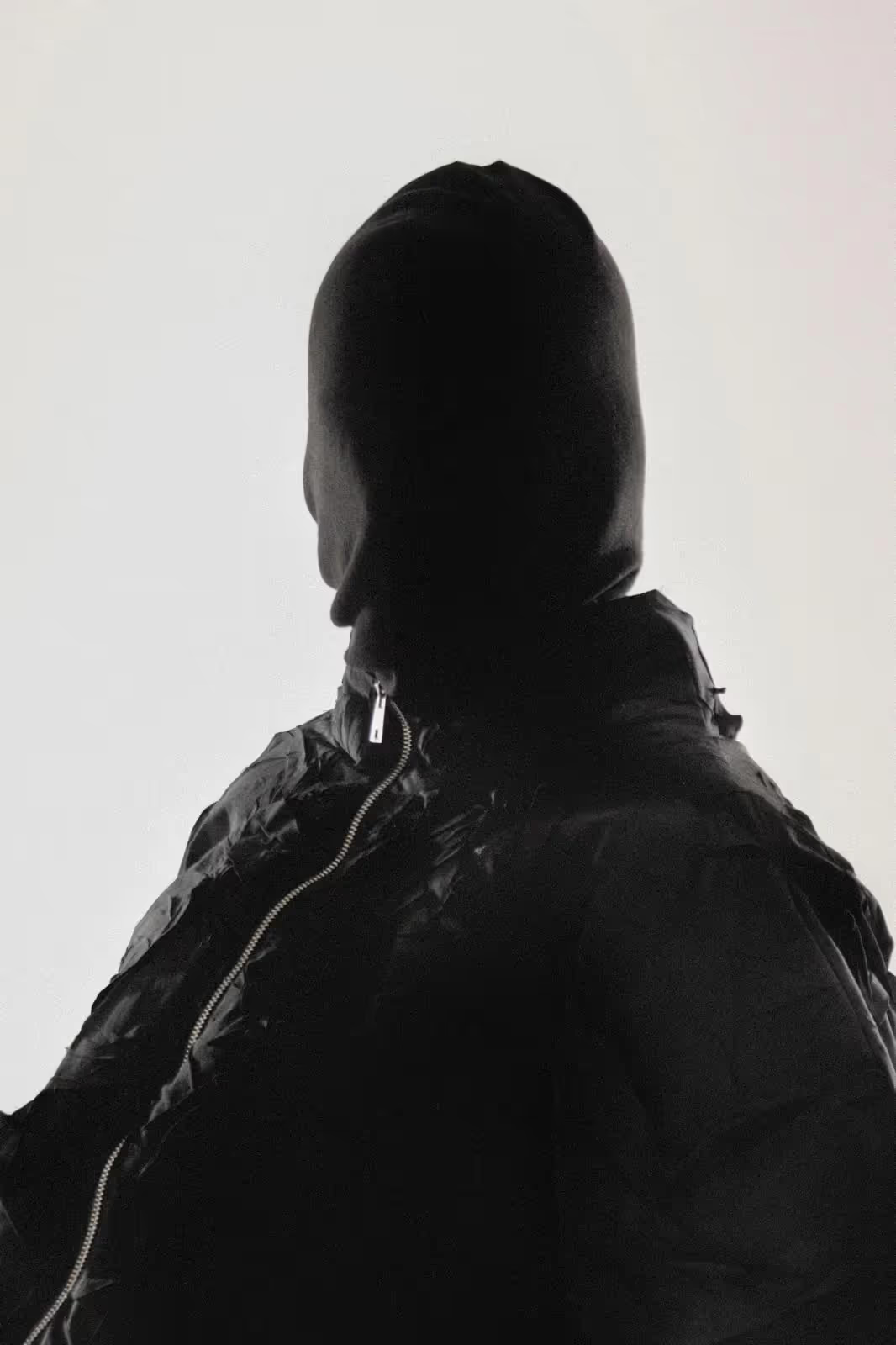
Post-apocalyptic clothing responds to reality. It combines protection with expression, function with philosophy. This is what OSTUFF CORPORATION calls clothing for dystopic humans.
THE DESIGN PRINCIPLES
1. Function first
Every element serves a purpose. Magnetic snaps instead of buttons.
2. Layering as system
Post-apocalyptic design treats layers as modular systems.
3. Material honesty
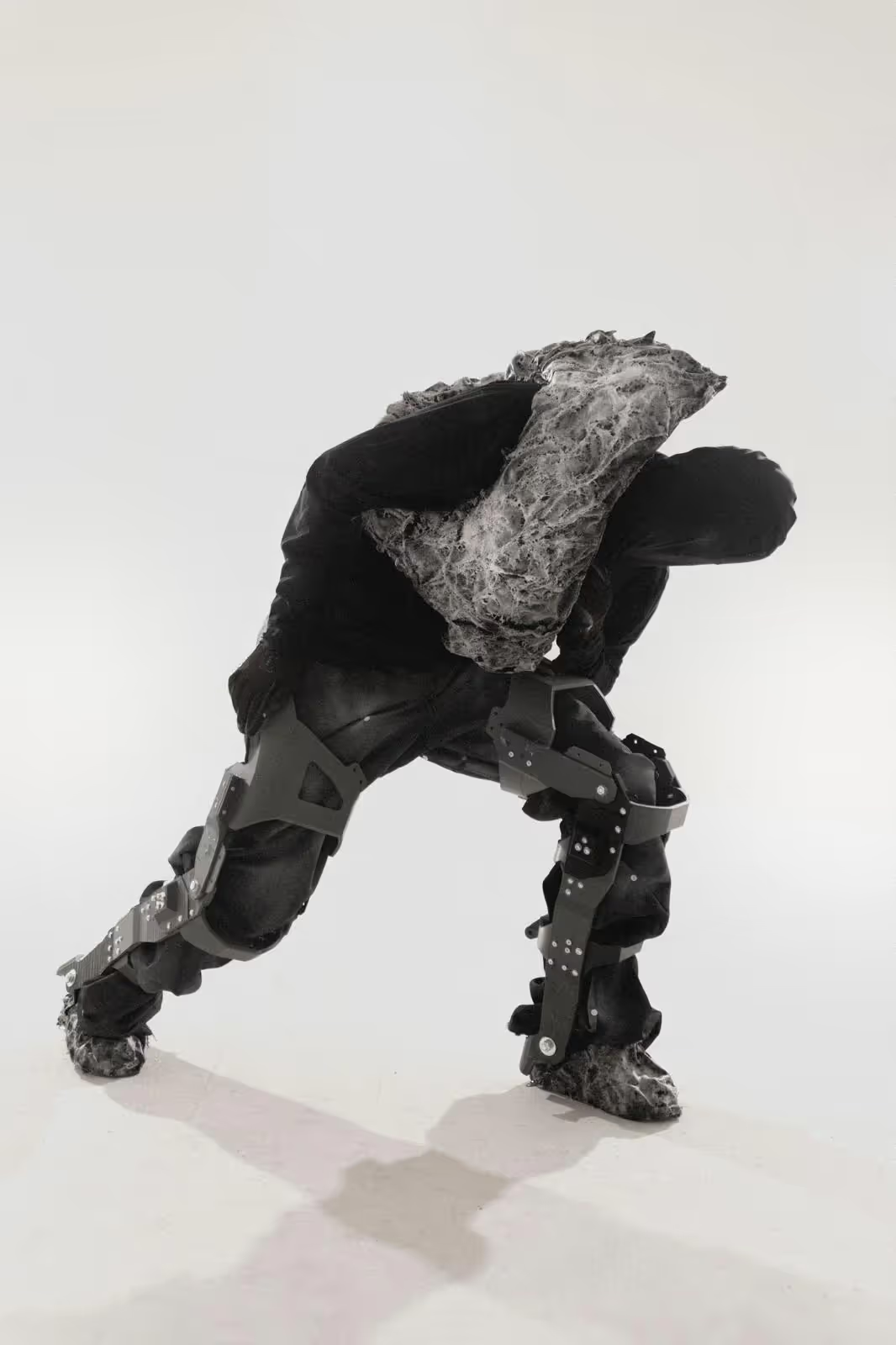
Technical cotton, memory-shape materials, weatherproof coatings.
4. Monochromatic restraint
When everything is the same palette, silhouette becomes the statement.
BEYOND AESTHETICS
We need garments that protect us, that adapt to our lives, that last, and that mean something.
OSTUFF CORPORATION® — Handcrafted for dystopic humans. Made to order in Paris.
FEATURED PIECE
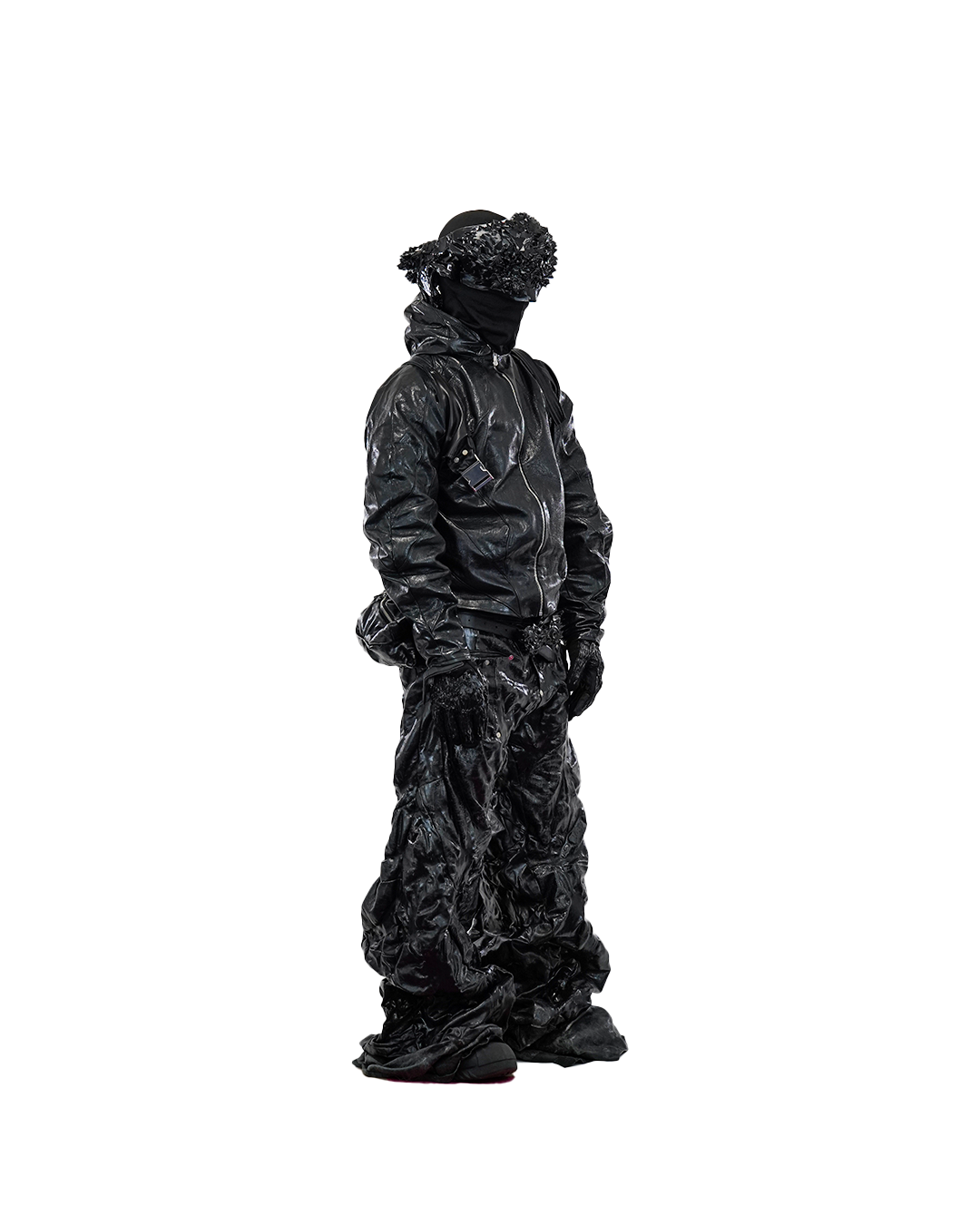
FROM THE COLLECTION
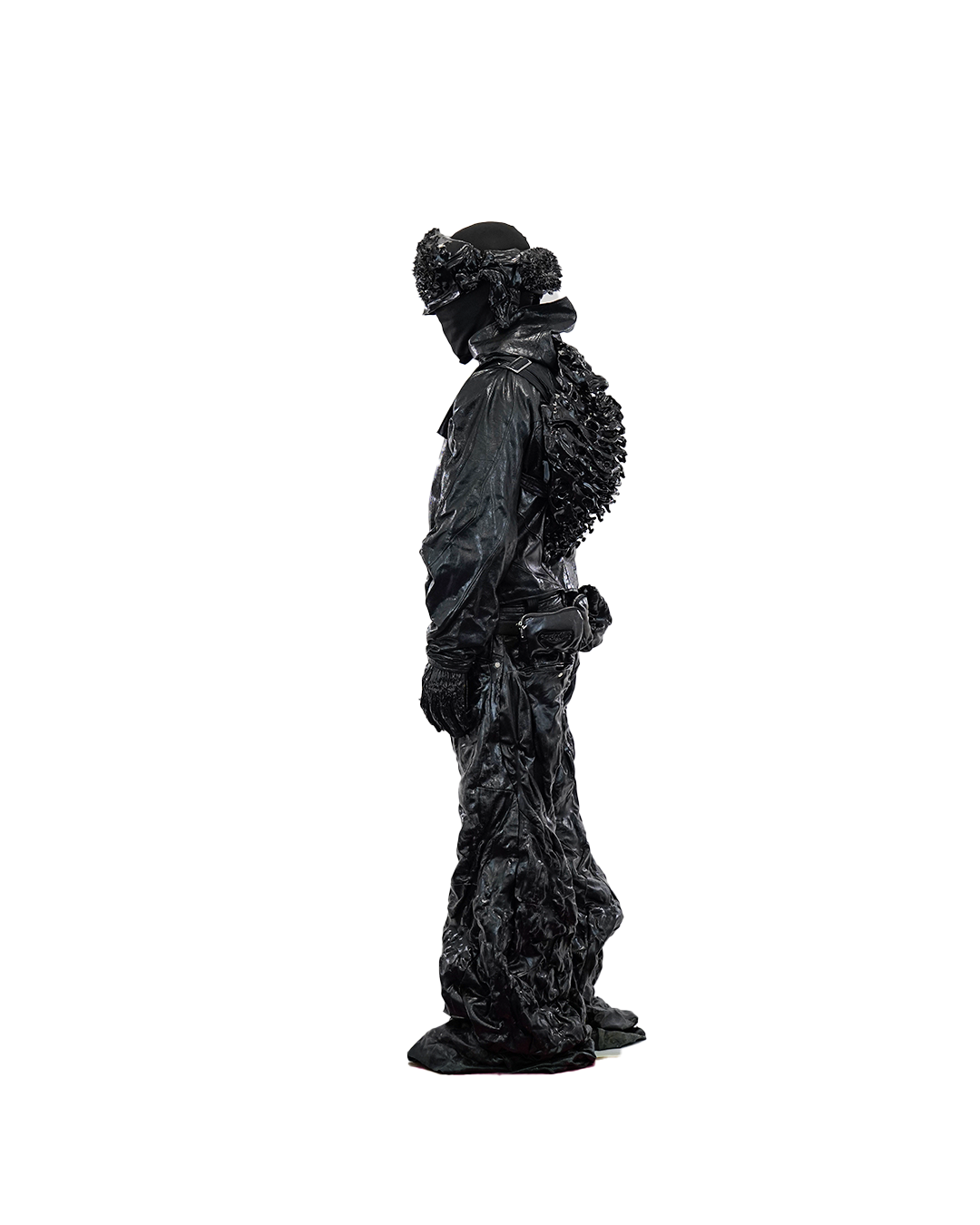
FULL OUTFIT — EXP003
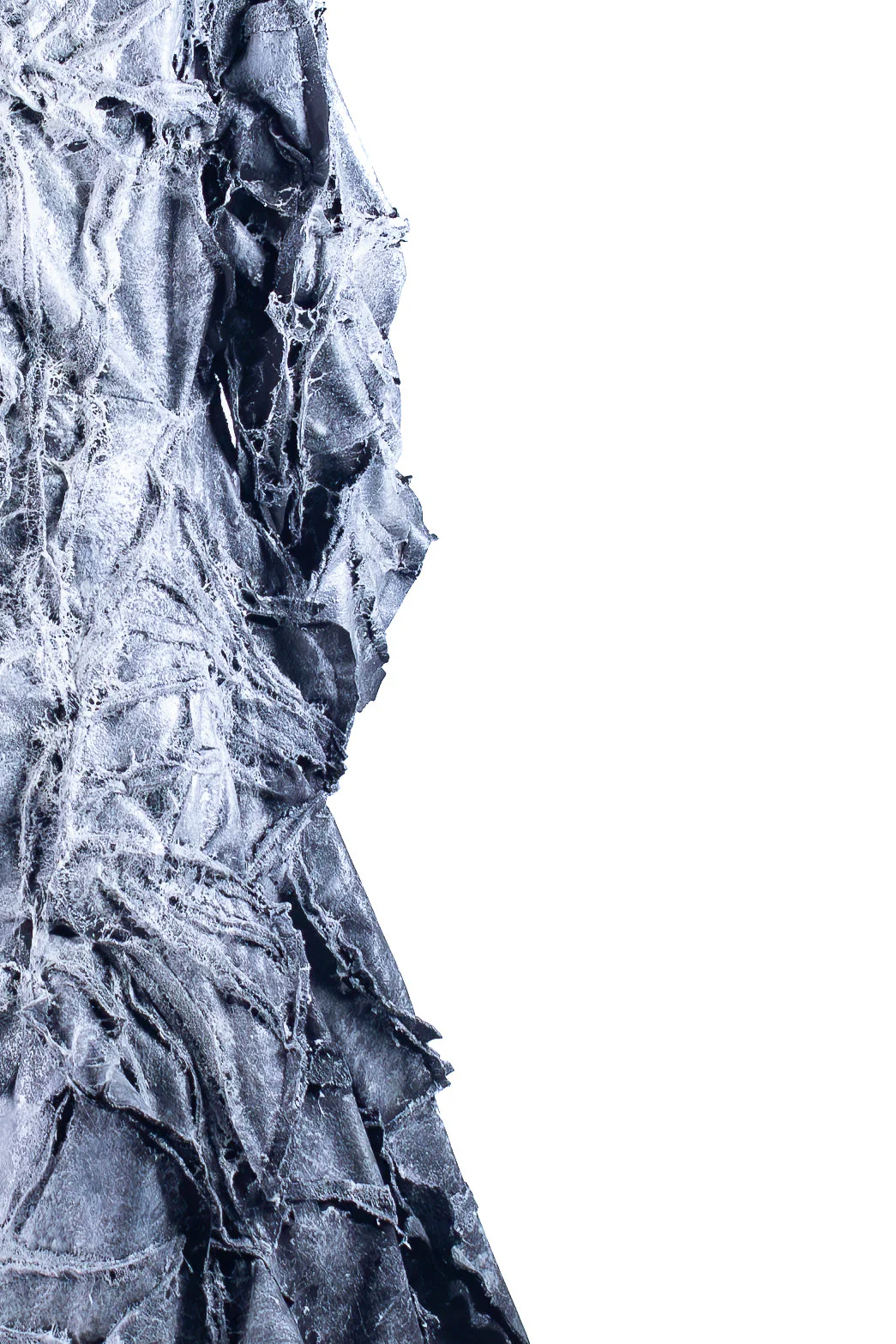
Black crinkled leather with structured 3D backpack
VIEW PRODUCT%20(1).png)
.avif)
Heading 1
Heading 2
Heading 3
Heading 4
Heading 5
Heading 6
Lorem ipsum dolor sit amet, consectetur adipiscing elit, sed do eiusmod tempor incididunt ut labore et dolore magna aliqua. Ut enim ad minim veniam, quis nostrud exercitation ullamco laboris nisi ut aliquip ex ea commodo consequat. Duis aute irure dolor in reprehenderit in voluptate velit esse cillum dolore eu fugiat nulla pariatur.
Block quote
Ordered list
- Item 1
- Item 2
- Item 3
Unordered list
- Item A
- Item B
- Item C
Bold text
Emphasis
Superscript
Subscript